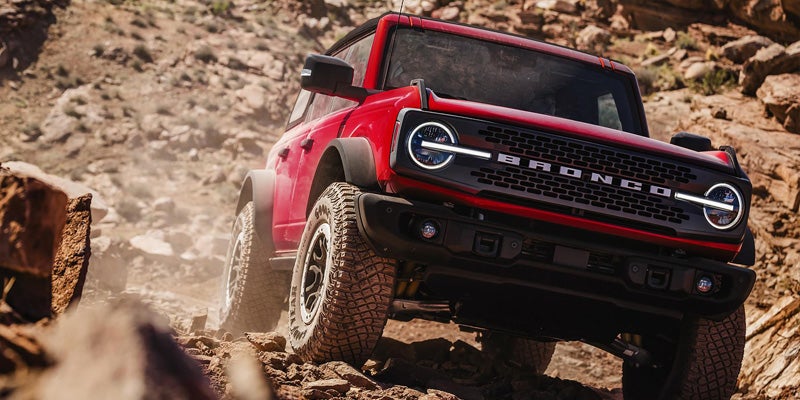
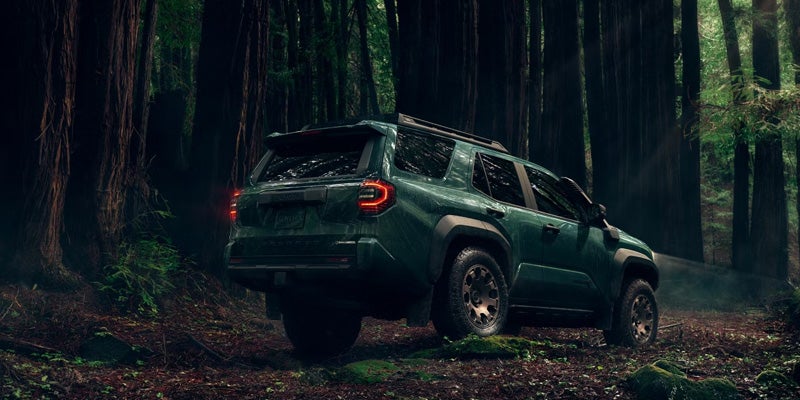
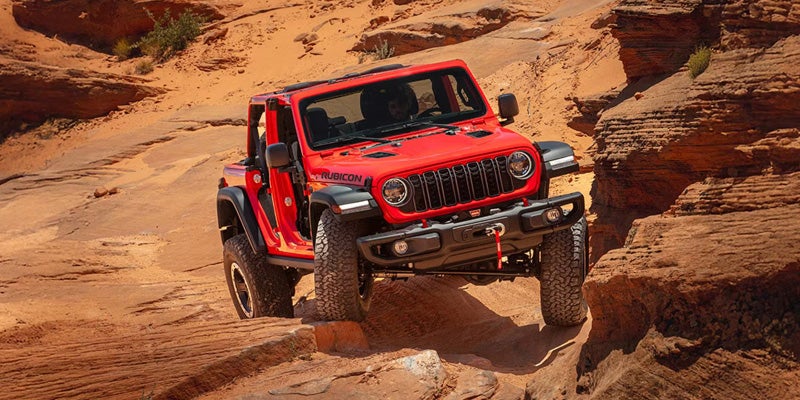
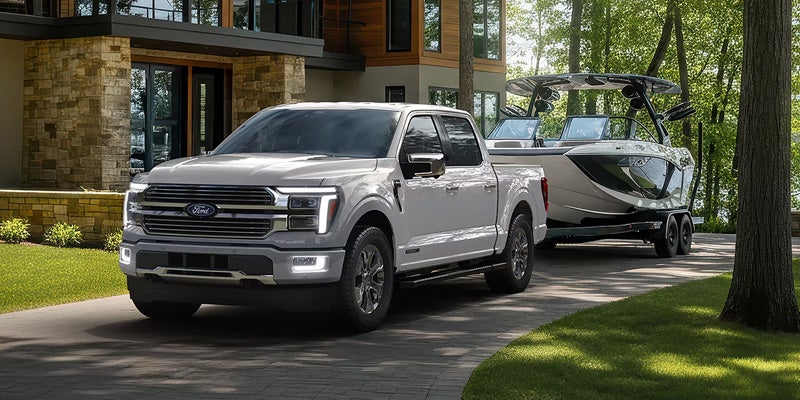
Federal Car Loan Interest Tax Deduction Summary (Tax Years 2025–2028): Under the One, Big, Beautiful Bill Act (Public Law 119-21, Section 70203) and final Treasury and IRS regulations ( Treasury Decision 10054, published in Internal Revenue Bulletin 2026-39, and IRS Publication 6126), eligible taxpayers who finance a new, U.S.-assembled passenger vehicle for personal use with a first-lien auto loan originated after December 31, 2024, can deduct up to $10,000 per year in qualified passenger vehicle loan interest (QPVLI) for taxable years 2025 through 2028—even if they take the standard deduction. Because the IRS requires final assembly within the United States and a Gross Vehicle Weight Rating (GVWR) of less than 14,000 pounds, knowing which trucks, SUVs, cars, and minivans are built in American plants—and how to verify a vehicle's 17-character VIN on the window sticker—can save Wyoming buyers thousands of dollars over the life of an auto loan. Shop All New Inventory at Fremont Motors Browse New Trucks in Wyoming Browse New SUVs in Wyoming How the IRS Car Loan Interest Deduction Works (IRS Pub. 6126 & TD 10054) The Treasury Department and the IRS finalized the rules governing Qualified Passenger Vehicle Loan Interest (QPVLI) under 26 CFR § 1.163-16 and § 1.6050AA-1 (Treasury Decision 10054, Internal Revenue Bulletin 2026-39) alongside taxpayer guidance in IRS Publication 6126 ( Purchased A New Vehicle?). Below are the exact statutory and regulatory requirements every Wyoming buyer should review before financing a new vehicle. IRC § 163(h)(4) & § 63(b)(7) Up to $10,000 Annual Deduction Taxpayers may deduct up to $10,000 per federal tax return per year in qualified interest paid or accrued during taxable years beginning after December 31, 2024, and before January 1, 2029 (tax years 2025 through 2028). If you hold more than one qualifying auto loan, you can combine the interest from all qualifying loans up to the $10,000 annual return limit. Standard or Itemized Filers No Itemizing Required You do not need to itemize deductions on Schedule A to claim this tax break. The deduction is available to both non-itemizing taxpayers who claim the standard deduction and itemizing taxpayers. 26 CFR § 1.163-16(h)(2) MAGI Income Phase-Out The deduction begins to phase out when Modified Adjusted Gross Income (MAGI) exceeds $100,000 for single, head of household, or married filing separately filers, or $200,000 for married couples filing jointly. It is reduced by $200 for each $1,000 (or fraction thereof) above the limit, phasing out completely at $150,000 (single) or $250,000 (joint). Vehicle & Loan Eligibility Checklist Under IRS Publication 6126 and 26 CFR § 1.163-16(d)–(f), both the vehicle (an Applicable Passenger Vehicle, or APV) and the financing contract (a Specified Passenger Vehicle Loan, or SPVL) must satisfy all of the following conditions: Loan Originated After December 31, 2024: The indebtedness must be incurred after December 31, 2024, and secured by a first lien on the purchased vehicle. Unsecured personal loans, credit cards, loans from related parties, and vehicle leases do not qualify. Brand-New Vehicle ("Original Use" Rule): Original use of the vehicle must commence with the taxpayer, and the loan documentation must classify the vehicle as a new vehicle. Used or pre-owned vehicles and lease buyouts do not qualify. However, under final regulation § 1.163-16(e)(2)(ii), a dealership demonstrator vehicle held primarily for sale and used for customer test drives still qualifies for its first retail buyer, and a new prior-model-year vehicle (such as a new 2025 model purchased in 2026) also qualifies. Final Assembly in the United States: The vehicle must have undergone final assembly at a plant, factory, or facility located within the United States. Personal Use Expectation (>50% Rule): At the time the loan is originated, the buyer must expect that the vehicle will be used for personal use by the buyer, their spouse, or a qualifying relative for more than 50 percent of the time the buyer expects to own the vehicle. Under final IRS rules, this expectation is evaluated once at loan origination and does not require annual recertification. Fleet and commercial-only purchases are excluded. Qualifying Body Styles & Under 14,000 Lbs. GVWR: The vehicle must be a car, SUV, pickup truck, minivan, van, or motorcycle manufactured primarily for use on public streets, roads, and highways, with at least two wheels and a Gross Vehicle Weight Rating (GVWR) of less than 14,000 pounds. What Financed Items Count Toward Deductible Loan Interest? A major clarification in the IRS final regulations ( TD 10054, 26 CFR § 1.163-16(d)(2)) addresses items rolled into the "amount financed" on a retail installment sales contract. The IRS confirmed that interest is deductible not only on the vehicle's purchase price, but also on items customarily financed in a vehicle purchase transaction that are directly related to the purchased vehicle. Qualifying Financed Items (Interest IS Eligible) Vehicle Purchase Price & Factory/Installed Accessories: The base vehicle price, factory packages, and vehicle-related accessories purchased as part of the transaction. Taxes & Government Fees: Sales taxes, title fees, registration fees, and dealer documentation fees financed with the purchase. Warranties & Service Plans: Extended warranties and vehicle service or mechanical repair plans financed in the purchase contract. Vehicle Protection & GAP Products: Tire, wheel, paint, and interior protection products, key fob replacement plans, GAP waivers/insurance, and credit insurance products. Qualifying Refinanced Loans: If you refinance an eligible loan later, interest on the new first-lien loan remains deductible up to the outstanding principal balance of the original loan at the time of refinancing. Non-Qualifying Financed Items (Interest is NOT Eligible) Negative Trade-In Equity: Existing debt rolled over from a trade-in vehicle that exceeds the trade-in's contract value does not qualify. Helpful IRS Rule: Under § 1.163-16(d)(2)(iii)(B), any cash down payment you make at purchase is applied first to wipe out negative equity before reducing your qualifying loan balance. Unrelated Property on the Same Loan: Financing a separate trailer, camper, ATV, or boat on the same contract requires allocating out that non-vehicle portion. Standard Auto Insurance Policies: Financed collision and liability insurance policies (other than credit insurance) do not qualify. Cash-Out Refinancing Proceeds: Any refinanced loan amount that exceeds the payoff balance of the original vehicle loan does not qualify. Why the "Under 14,000 Lbs. GVWR" Rule Is Huge for Wyoming Truck Buyers In Wyoming, pickup trucks aren't just commuters, they pull stock trailers over South Pass, haul fifth-wheel campers into the Bighorns, and handle winter ranch work across Fremont, Natrona, Park, Sweetwater, and Sheridan counties. Because the statutory weight cap in IRC § 163(h)(4)(D)(vi) is a Gross Vehicle Weight Rating (GVWR) of less than 14,000 pounds (the top of Class 3), the deduction covers far more than compact SUVs and half-ton pickups: Half-Ton Pickups (Class 2a — 6,001 to 8,500 lbs. GVWR): U.S.-assembled Ford F-150, Ram 1500 (Sterling Heights, MI builds), Chevrolet Silverado 1500 (Fort Wayne, IN builds), GMC Sierra 1500 (Fort Wayne, IN builds), Toyota Tundra (6,990–7,780 lbs. GVWR), and Honda Ridgeline all sit well below the 14,000-pound limit. Three-Quarter-Ton Heavy Duty Pickups (Class 2b — 8,501 to 10,000+ lbs. GVWR): Every Ford Super Duty F-250 (assembled in Kentucky or Ohio) and Chevrolet Silverado 2500HD / GMC Sierra 2500HD (assembled in Flint, Michigan) has a GVWR between 10,000 and 11,350 pounds—qualifying under the 14,000-pound cap when purchased new for personal use. One-Ton Heavy Duty Pickups (Class 3 — 10,001 to 14,000 lbs. GVWR): Single Rear Wheel (SRW) Ford F-350 Super Duty and Chevy Silverado 3500HD / GMC Sierra 3500HD models (and many Dual Rear Wheel 3500/F-350 configurations equipped with a 13,000–14,000 lb. GVWR package—verify that the exact door-jamb GVWR is less than 14,000 lbs., as standard 14,000 lb. DRW ratings hit the ceiling) are assembled in the United States. By contrast, Class 4+ chassis cabs and F-450 pickups (14,001+ lbs. GVWR) exceed the limit. 2026 Ford F-150 — Assembled in Dearborn, Michigan, and Claycomo, Missouri (1st VIN digit: 1). Photo: Ford. American-Made Vehicles Available Across Fremont Motor Company Dealerships As the Treasury Department and IRS explicitly noted in TD 10054, you cannot assume a vehicle's final assembly location based solely on where the automaker is headquartered. Several models from U.S.-headquartered brands are assembled in Mexico or Canada, while many top-selling trucks, SUVs, and sedans from Toyota, Honda, and Volkswagen are built in American factories across Texas, Indiana, Kentucky, Alabama, Ohio, and Tennessee. Use the verified brand-by-brand matrix below—cross-checked against official 2026 and 2027 OEM specification sheets and NHTSA plant data—to shop American-assembled models across Fremont Motor Company's Wyoming dealerships. Brand & Fremont Locations U.S.-Assembled New Models (Eligible When VIN Starts With 1, 4, 5, or 7) Verified U.S. Final Assembly Plant(s) Important VIN & Sourcing Notes (Models Built Outside the U.S.) Ford Lander, Riverton, Cody, Sheridan, Powell F-150 & F-150 Lightning Super Duty F-250 & F-350 (GVWR < 14,000 lbs.) Bronco Explorer Expedition & Expedition MAX Ranger, Escape, Mustang, Transit (GVWR < 14,000 lbs.) Dearborn, MI & Claycomo, MO (F-150, Transit) Louisville, KY & Avon Lake, OH (Super Duty, Expedition, Escape) Wayne, MI (Bronco, Ranger) Chicago, IL (Explorer) Flat Rock, MI (Mustang) Watch Out: Ford Maverick, Bronco Sport, and Mustang Mach-E are assembled in Mexico (VIN starts with 3) and do not qualify. On F-350 DRW models, verify GVWR is under 14,000 lbs. Jeep, Dodge, Ram & Chrysler Casper, Lander, Cody, Powell, Rock Springs, Rawlins Ram 1500 (U.S.-built VINs) Jeep Wrangler & Wrangler 4xe Jeep Gladiator Jeep Grand Cherokee & Grand Cherokee L Jeep Grand Wagoneer & Wagoneer Dodge Durango Sterling Heights, MI (Ram 1500) Toledo, OH (Wrangler, Gladiator) Detroit, MI — Mack & Jefferson Plants (Grand Cherokee, Grand Cherokee L, Durango) Warren, MI (Wagoneer, Grand Wagoneer) Watch Out: Ram 2500 & 3500 Heavy Duty are assembled in Saltillo, Mexico (VIN starts with 3) and do not qualify. Select Ram 1500 units are also built in Saltillo—confirm the 1st VIN digit is 1. Jeep Compass (Mexico, VIN 3) and Chrysler Pacifica / Dodge Charger (Windsor, Canada, VIN 2) do not qualify. Chevrolet & GMC Riverton Chevy Silverado 1500 & GMC Sierra 1500 (Fort Wayne VINs) Silverado 2500HD / 3500HD & Sierra 2500HD / 3500HD (GVWR < 14,000 lbs.) Chevy Tahoe & Suburban / GMC Yukon & Yukon XL Chevy Traverse / GMC Acadia Chevy Colorado / GMC Canyon Chevy Corvette Fort Wayne, IN (Silverado 1500, Sierra 1500) Flint, MI (Silverado HD, Sierra HD) Arlington, TX (Tahoe, Suburban, Yukon, Yukon XL) Lansing, MI (Traverse, Acadia) Wentzville, MO (Colorado, Canyon) Bowling Green, KY (Corvette) Dual-Sourced Alert: Silverado 1500 and Sierra 1500 are built in Fort Wayne, IN (VIN starts with 1), Silao, Mexico (VIN 3), and Oshawa, Canada (VIN 2). Only VINs starting with 1 qualify! Meanwhile, all Flint-built 2500HD/3500HD trucks start with 1. Equinox, Blazer, and Terrain (Mexico, VIN 3) and Trax / Trailblazer (South Korea, VIN K) do not qualify. Toyota Lander, Sheridan Toyota Tundra & Tundra i-FORCE MAX Toyota Sequoia Grand Highlander & Highlander (Gas & Hybrid) Toyota Sienna Toyota Camry Corolla Cross & Corolla Cross Hybrid RAV4 & RAV4 Hybrid (Kentucky-built VINs) Corolla Sedan (Mississippi-built VINs) San Antonio, TX (Tundra, Sequoia) Princeton, IN (Highlander, Grand Highlander, Sienna) Georgetown, KY (Camry, select RAV4 / RAV4 Hybrid) Huntsville, AL (Corolla Cross & Hybrid) Blue Springs, MS (select Corolla Sedans) Dual-Sourced Alert: Every Tundra, Sequoia, Highlander, Grand Highlander, Sienna, Camry, and Corolla Cross is U.S.-assembled (VIN starts with 4, 5, or 7). However, RAV4 is built in Kentucky (VIN 4), Canada (VIN 2), and Japan (VIN J)—verify the 1st VIN digit is 4! Tacoma (Mexico, VIN 3) and 4Runner, Land Cruiser, Prius, and Crown (Japan, VIN J) do not qualify. Honda Casper Honda Pilot Honda Passport Honda Ridgeline Honda Odyssey CR-V & CR-V Hybrid (Ohio/Indiana VINs) Honda Accord & Civic Hatchback Lincoln, AL (Pilot, Passport, Ridgeline, Odyssey) East Liberty, OH & Greensburg, IN (CR-V, CR-V Hybrid) Marysville, OH (Accord) Greensburg, IN (Civic Hatchback) Dual-Sourced Alert: Every Pilot, Passport, Ridgeline, Odyssey, Accord, and Civic Hatchback is built in the U.S. (VIN starts with 1, 5, or 7). Because CR-V is built in both Ohio/Indiana and Ontario, Canada, verify the 1st VIN digit is 5 or 7 (not 2). HR-V and Prologue (Mexico, VIN 3) do not qualify. Volkswagen Casper Volkswagen Atlas Volkswagen Atlas Cross Sport Volkswagen ID.4 Chattanooga, TN (Atlas, Atlas Cross Sport, ID.4) Watch Out: Every Chattanooga-built Atlas, Atlas Cross Sport, and ID.4 starts with VIN digit 1 and qualifies. However, VW Tiguan, Taos, and Jetta are assembled in Puebla, Mexico (VIN starts with 3), and Golf GTI / Golf R are built in Germany (VIN W). 2026 Jeep Wrangler — Assembled at the Toledo Assembly Complex in Toledo, Ohio (1st VIN digit: 1). Photo: Jeep. How to Verify U.S. Final Assembly in 30 Seconds (IRS Pub. 6126 Protocol) Because certain popular models—such as the Chevrolet Silverado 1500, GMC Sierra 1500, Ram 1500, Toyota RAV4, and Honda CR-V —are produced in multiple North American plants, the IRS and Treasury Department specify three ways to confirm that a specific vehicle on the lot underwent final assembly in the United States: 1. Check the 1st Character of the VIN Every vehicle has a 17-character Vehicle Identification Number (VIN) visible through the driver's-side lower windshield, on the driver's door jamb, and on every Fremont Motors online listing: 1, 4, 5, or 7: United States (Qualifies for U.S. final assembly) 2: Canada (Does not qualify) 3: Mexico (Does not qualify) J: Japan (Does not qualify) K: South Korea (Does not qualify) W: Germany (Does not qualify) 2. Inspect the Window Sticker (Monroney Label) Under 26 CFR § 1.163-16(e)(3)(ii) and the American Automobile Labeling Act (49 CFR 583.5(a)(3)), every new vehicle on a Fremont Motor Company lot carries a federal Monroney window sticker. Look at the "Parts Content Information" box to see the exact Final Assembly Point (city, state, and country) printed directly by the manufacturer. 3. Run the Official NHTSA VIN Decoder IRS Publication 6126 and TD 10054 direct buyers and lenders to the free NHTSA VIN Decoder. Entering any 17-character VIN confirms both the Plant Country (United States) and the vehicle's Gross Vehicle Weight Rating (GVWR < 14,000 lbs.) in seconds. How to Claim the Deduction: Form 1098-VLI & Tax Return Filing Once you finance an eligible American-assembled new vehicle at a Fremont Motor Company dealership, keep these three IRS reporting rules in mind for tax years 2025 through 2028: Watch for IRS Form 1098-VLI ( Vehicle Loan Interest Statement): Under IRC § 6050AA and 26 CFR § 1.6050AA-1, any lender or loan servicer that receives $600 or more in interest on a Specified Passenger Vehicle Loan during a calendar year must file an information return with the IRS and furnish Form 1098-VLI to the principal borrower (payor of record). Form 1098-VLI reports the total interest received for the calendar year, the loan origination date, the outstanding principal at the start of the year, and the vehicle's year, make, model, and VIN. (If your annual interest is under $600, you may still deduct the eligible interest using your loan statements.) Include the 17-Character VIN on Your Federal Tax Return: Under IRC § 163(h)(4)(B)(iii) and 26 CFR § 1.163-16(c)(5), no deduction is allowed unless you report the purchased vehicle's 17-character VIN on your federal income tax return (Form 1040 and its applicable schedule) for every taxable year you claim the deduction. Keep Your Purchase Contract & Window Sticker in Your Tax Records: Retain a copy of your retail installment sales contract, your Monroney window sticker showing U.S. final assembly, and your annual Form 1098-VLI statements with your permanent tax records. Frequently Asked Questions About the American-Made Car Loan Interest Tax Break Does a new heavy-duty pickup like a Ford F-250, F-350, or Chevy Silverado 2500HD qualify for the car loan interest deduction? Yes, provided it meets the personal use, first-lien loan, and weight criteria. Both the Ford F-250 and F-350 Super Duty (assembled in Louisville, Kentucky, and Avon Lake, Ohio) and the Chevrolet Silverado 2500HD / 3500HD and GMC Sierra 2500HD / 3500HD (assembled in Flint, Michigan) undergo final assembly in the United States and have VINs starting with 1. Because the IRS weight limit is a Gross Vehicle Weight Rating (GVWR) of less than 14,000 pounds, all F-250/2500HD and Single Rear Wheel (SRW) F-350/3500HD pickups fall below the 14,000-pound cap. If you purchase the truck expecting more than 50% personal use (such as family travel and personal horse or camper towing), it qualifies. Note that Ram 2500 and 3500 Heavy Duty trucks are assembled in Saltillo, Mexico (VIN starts with 3) and do not meet the U.S. final assembly rule. Do Toyota, Honda, and Volkswagen vehicles sold at Fremont Motors qualify as "American-made" under the IRS rules? Many of them do! The IRS statute looks strictly at where final assembly of the specific vehicle occurred —not the country where the automaker's corporate headquarters is located. At Fremont Toyota (Lander and Sheridan), every new Tundra, Sequoia, Highlander, Grand Highlander, Sienna, Camry, and Corolla Cross is assembled in the United States, along with Kentucky-built RAV4 models (VIN starting with 4). At Fremont Honda in Casper, every new Pilot, Passport, Ridgeline, Odyssey, Accord, and Civic Hatchback —plus Ohio- and Indiana-built CR-V models (VIN starting with 5 or 7)—is assembled in the U.S. And at Fremont Volkswagen in Casper, every new Atlas, Atlas Cross Sport, and ID.4 is assembled in Chattanooga, Tennessee (VIN starting with 1). If I finance an extended warranty, GAP waiver, or sales tax into my auto loan, is the interest on those items deductible? Yes. Under the final regulations in Treasury Decision 10054 (26 CFR § 1.163-16(d)(2)(i)), a Specified Passenger Vehicle Loan includes amounts customarily financed in a vehicle purchase transaction that are directly related to the purchased vehicle. That includes sales taxes, title and registration fees, dealer documentation fees, extended warranties, mechanical repair/service plans, tire/wheel/paint/interior protection products, and GAP waivers. However, interest on negative equity rolled over from a trade-in does not qualify (though any cash down payment you make is applied first to offset that negative equity). Can I claim the car loan interest deduction if I take the standard deduction on my federal taxes? Yes. Under IRC § 63(b)(7) and 26 CFR § 1.163-16(a)(2)(ii), the deduction for qualified passenger vehicle loan interest (up to $10,000 per return per year for tax years 2025 through 2028) is available regardless of whether you itemize deductions or claim the standard deduction. Does a dealership demonstrator vehicle or a leftover new 2025 model purchased in 2026 qualify? Yes. Under 26 CFR § 1.163-16(e)(2)(ii), if a dealership holds a vehicle primarily for sale to customers in the ordinary course of business and uses it as a demonstrator for test drives, original use does not commence with the dealer—even if state law required the dealer to temporarily title or register the demonstrator—so long as your loan documentation treats the vehicle as a new vehicle. The IRS also confirmed that a new vehicle manufactured in a prior model year (for example, a new 2025 model sold to its first retail buyer in 2026) satisfies the original-use requirement. Verify Your VIN With a Fremont Motor Company Specialist Shopping for a new truck, SUV, or sedan that qualifies for the federal car loan interest deduction is straightforward when you work with our local teams in Lander, Riverton, Casper, Cody, Powell, Sheridan, Rock Springs, and Rawlins. Our sales and finance specialists can pull the window sticker and verify the 1st VIN digit and GVWR on any new Ford, Jeep, Dodge, Ram, Chevrolet, GMC, Toyota, Honda, or Volkswagen in our inventory before you sign. Search U.S.-Assembled New Vehicles Find Your Nearest Fremont Dealership Important Tax & Legal Disclosure: This article is provided by Fremont Motor Company for general informational purposes only and does not constitute federal or state tax, legal, or accounting advice. Tax eligibility depends on your individual tax filing status, Modified Adjusted Gross Income (MAGI), personal use expectations, loan origination terms, and the specific Vehicle Identification Number (VIN) and Gross Vehicle Weight Rating (GVWR) of the vehicle purchased. Always verify the Final Assembly Point on the vehicle's Monroney window sticker and via the official NHTSA VIN Decoder prior to purchase, and consult a certified public accountant (CPA), enrolled agent, or qualified tax advisor regarding how IRC § 163(h)(4), IRS Publication 6126, and Treasury Decision 10054 (26 CFR § 1.163-16) apply to your personal tax return.